
The 20 Best Demo Automation Platforms in 2026 (Videos, Screenshots, Real Pricing)

17. Juli 2026 · 34 min read
The 20 Best Demo Automation Platforms in 2026 (Videos, Screenshots, Real Pricing)
The 20 best demo automation platforms in 2026, compared on product, pricing, and reviews, with videos and screenshots, plus one you can talk to right here.
The 20 Best Demo Automation Platforms in 2026 (Videos, Screenshots, Real Pricing)
Quick Takeaways
- Demo automation is no longer one category. In 2026 it spans five: AI demo agents that talk to buyers, interactive demo builders, enterprise demo platforms, AI SDRs and conversational sales agents, and one storytelling wildcard
- The market consolidated hard this year: Salesforce closed its acquisition of Qualified, Consensus acquired Saleo, and the Hexus product moved to Olto. Buy with the roadmap in mind
- Pricing transparency is the exception, not the rule: only about half of these 20 platforms publish prices, and entry points range from free tiers to six figures per year
- For every tool below you will find a video and a screenshot. For Naoma you will find neither, because the live agent is embedded in this article and you can simply talk to it
- Whatever you shortlist, run the same test: put it in front of real traffic and measure visitor-to-demo conversion against your current baseline
We build one of these tools, so let us be upfront: Naoma is on this list, and it is listed first. But we reviewed all 20 platforms with the same rubric: what the product does, who it fits, what it costs when pricing is public, and what reviewers say. No scoring theater and no affiliate links. Just product, fit, pricing, and reviews.
One more note on method. Every platform here was verified as alive and shipping in July 2026. That check mattered more than usual this year: several once-popular demo tools quietly disappeared (Fable, for example, shut down in early 2026), and three of the twenty changed owners. Where an acquisition affects the roadmap, we say so.
What counts as demo automation software in 2026
The term covers everything from a click-through screenshot tour to an AI agent that runs a live video call. We group the 20 platforms into five categories:
- AI demo agents. Software that gives the demo itself: it presents your product, answers questions live, qualifies the buyer, and books the next step. We compared this category in depth in interactive demos vs AI demos
- Interactive demo builders. Tools your team uses to capture and publish click-through demos, tours, and product videos that buyers explore alone
- Enterprise demo platforms. Heavy machinery for presales teams: full product clones, live demo data injection, demo governance, and analytics
- AI SDRs and conversational sales agents. Conversation-first agents that qualify visitors, book meetings, and join calls, but do not deliver self-serve product demos on your website
- The storytelling wildcard. One vendor sells cinematic product stories rather than demos, and it deserves its own shelf
Quick comparison
| # | Platform | Category | Best for | G2 rating | Pricing (entry) |
|---|---|---|---|---|---|
| 1 | Naoma | AI demo agent | Converting website visitors with live AI video demos, plus smart AI onboarding for new users | 4.9 (G2), 5.0 (Product Hunt) | From $299/mo ($249 annual), pay per engaged demo |
| 2 | Navattic | Interactive demo builder | Pixel-perfect HTML tours for marketing sites | 4.8, ~900+ reviews | Free; paid tiers custom |
| 3 | Supademo | Interactive demo builder | Most demo formats per dollar | 4.7, ~600 reviews | Free; paid from $38/creator/mo |
| 4 | Arcade | Interactive demo builder | Polished demos and AI product videos | 4.7, ~100 reviews | Free; paid from $42.50/seat/mo |
| 5 | Guideflow | Interactive demo builder | Wide capture-format range at a cheap entry point | 5.0, ~140 reviews | Free; paid from $35/mo |
| 6 | HowdyGo | Interactive demo builder | HTML demos with unlimited seats on every plan | 5.0, ~29 reviews | From $159/mo |
| 7 | Layerpath | Interactive demo builder | Demos, SOPs, and training from one recording | Limited G2 presence | Free; Pro $129/mo |
| 8 | Floik | Interactive demo builder | Budget one-recording-to-three-assets workflow | 4.7, ~47 reviews | Free; paid from $19/mo |
| 9 | Hexus | Interactive demo builder | AI-generated demo content (now under Olto) | 4.9, ~14 reviews | From $40/mo annual |
| 10 | Storylane | Interactive demo builder | Full-funnel interactive demos with transparent pricing | 4.8, ~1,400+ reviews | Free; paid from $40/mo |
| 11 | Walnut | Enterprise demo platform | Seller-led enterprise demos and deal rooms | 4.5, ~100+ reviews | From $575/mo, annual |
| 12 | Reprise | Enterprise demo platform | Tours, live overlays, and clones in one platform | 4.4, ~174 reviews | Custom; ~$20k-100k+/yr per third-party data |
| 13 | Demostack | Enterprise demo platform | High-fidelity product cloning for SE teams | 4.7, ~78 reviews | Custom |
| 14 | Saleo | Enterprise demo platform | Live demo data injection in your real product | 4.9, ~210 reviews | Custom |
| 15 | Consensus | Enterprise demo platform | Video demo automation at enterprise scale | 4.7, ~1,187 reviews | From $600/mo |
| 16 | Demoboost | Enterprise demo platform | Presales breadth at mid-market prices | 4.9, ~103 reviews | From $375/mo |
| 17 | Qualified | AI SDR agent | Salesforce-centric inbound teams | 4.9, ~1,200+ reviews | Custom; ~$68k/yr list per third-party data |
| 18 | Rep.ai | AI live chat agent | Human + AI live video chat on the website | 4.8, ~14 reviews | Custom |
| 19 | 1mind | AI sales engineer | AI sales engineers on live enterprise calls | 4.9, ~7 reviews | Custom; ~$100k/yr per public reporting |
| 20 | ScreenSpace | Storytelling | Cinematic interactive product stories | 4.9, ~26 reviews | $8k strategy + $28k per story |
Now the details, category by category.
AI demo agents
These platforms do not help you record a demo. They give the demo: a buyer arrives, the agent talks, shows the product, answers questions, qualifies, and books or routes the next step. If the concept is new to you, start with what is an AI demo agent.
1. Naoma
Best for: turning website visitors into qualified pipeline with live AI video demos, 24/7, and onboarding new users with the same smart AI agent.
Naoma is not just an AI video agent. It is an AI account executive with memory and enrichment. A visitor clicks "Get an AI demo" and within seconds is in a two-way video conversation with an agent that drives your real product, answers questions in real time, qualifies the prospect during the demo, and routes them to CRM, calendar, or checkout. It remembers every prospect, so a returning visitor continues the conversation where it left off instead of starting over. And it enriches every prospect with company, industry, and role data, so the demo speaks to their actual use case from the first sentence instead of running a generic script. It runs around the clock in 80+ languages, with best-in-class latency and engagement in live conversation.
You do not need a video about Naoma. Talk to our agent right now, this is the actual product:
Key features:
- Live two-way video demos of your real product, not a recording and not a chatbot
- Qualification during the conversation, with routing to CRM, calendar booking, or checkout
- Memory across conversations: the agent recognizes returning prospects and picks up where the last conversation ended, like a real account executive
- Prospect enrichment: the agent identifies the company, industry, and role behind each visitor and personalizes the demo to their use case
- Objection handling and technical Q&A trained on your product and competitive content
- 24/7 coverage in 80+ languages, so demand from any timezone converts while your team sleeps
- Smart AI onboarding: the same agent that demos to prospects walks new users through your product after signup
- Best-in-class latency and engagement: conversations flow naturally, and 89% of buyers say the agent feels human
- Outcome-based pricing: you pay only when a prospect engages for 3+ minutes, bounces are free
- Session analytics and CRM handoff for every conversation
Pricing and reviews: published in full on the pricing page: Starter at $299/mo (50 engaged demos), Growth at $900/mo (100 demos, live product walkthroughs, meeting booking, multilingual), Scale at $2,500/mo (300 demos, 2 agents, dedicated demo engineer), Enterprise custom — annual billing brings those to $249, $750, and $2,083. Reviews sit at 4.9 on G2 and 5.0 on Product Hunt, and Tekpon named Naoma Top Demo Software for Q1 2026.
Interactive demo builders
These are the tools most people mean by "demo automation": your team captures the product once, edits it into a guided tour, sandbox, or video, and buyers explore it on their own. They are content tools, not agents. Nothing here talks to your prospect, which is exactly why many teams run one of these alongside an AI demo agent.
2. Navattic
Best for: marketing teams that want pixel-perfect HTML product tours on the website.
Navattic is the HTML-capture veteran: its Chrome extension clones your app's actual front end, so tours look and behave like the live product, down to typing and scrolling. In 2025-2026 it shipped Agent Demos, an AI layer that runs demos autonomously, plus an AI Copilot for building and editing.
Key features:
- True HTML capture with an editable, clickable clone of your front end
- Agent Demos: AI-run demos that respond to buyer questions
- Launchpad demo centers for choose-your-own-adventure demo libraries
- Dynamic variables, account reveal, and interest-scoring lead forms
- Integrations with Salesforce, HubSpot, and Marketo; demo translation on enterprise plans
What makes it different: fidelity. When the demo must be indistinguishable from the real app on your marketing site, HTML cloning is the standard, and Navattic has been the reference implementation for years. The tradeoffs: analytics are lighter than the enterprise platforms, complex apps take real editing effort, and paid pricing went quote-based, with third-party sources reporting around $500/mo for the Base tier. Our detailed comparison: Naoma vs Navattic.
Pricing and reviews: free Starter plan (1 demo); Base, Growth, and Enterprise tiers are custom, billed annually. G2: 4.8 with ~900+ reviews.
3. Supademo
Best for: SMB and mid-market teams that want the most demo formats per dollar.
Supademo bundles six demo formats (screenshot demos, HTML capture, video, sandboxes, mobile, and offline) with a genuinely usable free tier. In June 2026 it launched its own AI Demo Agent, an autonomous conversational layer aimed at replacing book-a-demo forms, which makes it the clearest budget on-ramp into the agent category from a builder-first product.
Key features:
- Six demo formats in one product, including mobile and offline demos
- HTML demo builder plus click-anywhere sandbox environments
- AI voiceovers with voice cloning, auto-translation, and AI demo audits
- Branching logic, variables, and personalization
- Demo hubs and showcases with lead capture, plus per-step analytics
What makes it different: breadth-per-dollar. The free tier is real (5 demos, 4K recordings included), and paid plans undercut most rivals at every level. The catch is that the flagship capabilities (HTML demos, sandboxes, voice cloning) sit in the $350+/mo Growth tier, and advanced branding customization has limits reviewers mention often. Head-to-head: Naoma vs Supademo.
Pricing and reviews: Free plan; Scale at $38/creator/mo annual; Growth at $350/mo annual with 5 creators bundled; Enterprise custom. G2: 4.7 with ~600 reviews.
4. Arcade
Best for: product marketers who want demo content that looks designed, fast.
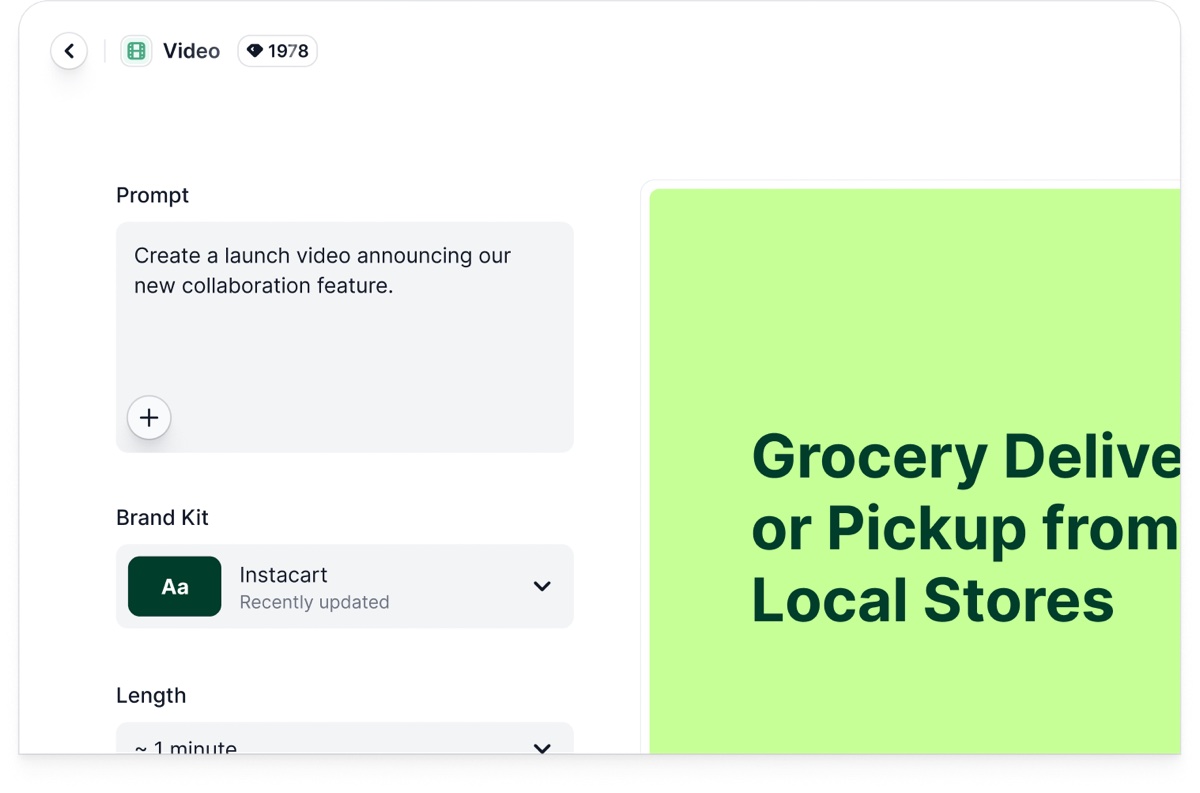
Arcade is the most polished, consumer-grade tool in the builder group, and in 2025-2026 it leaned hard into AI product videos: record a flow once and its AI turns it into an on-brand video with your logos, colors, fonts, and writing style applied automatically. Interactive demos, branching, and personalization are all still there.
Key features:
- AI video generation from recordings, with reusable Brand Kits
- Branching paths, custom variables, and in-demo CTAs
- Page Morph for editing text inside recorded product UI
- Synthetic voiceover and AI translation with automatic language detection
- Capture via Chrome extension, desktop app, or Figma plugin for unshipped features
- Live editing that propagates one change to every embed
What makes it different: design quality and speed to something you are proud to publish. It is the strongest choice on this list for turning product flows into marketing-grade videos. It does not do full HTML capture, so demos feel more linear than Navattic-style clones, and keeping content current after UI changes takes manual work.
Pricing and reviews: Free plan (1 published demo); Growth at $42.50/seat/mo annual; Enterprise custom. G2: 4.7 with ~100 reviews.
5. Guideflow
Best for: teams that want every capture format behind one login, from $35/mo.
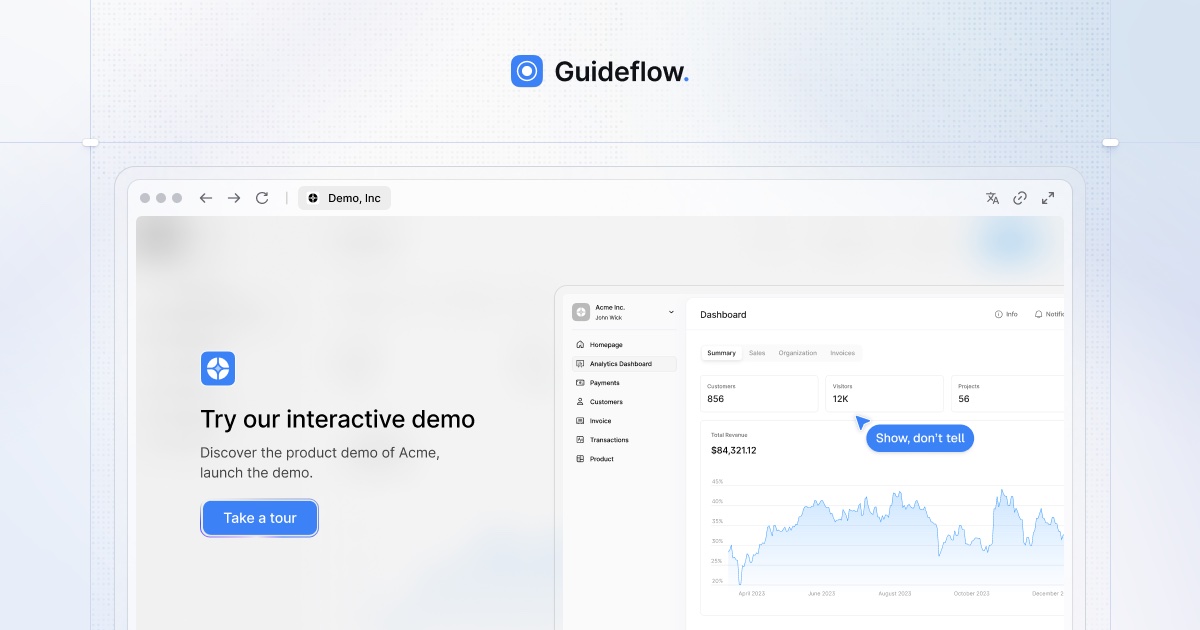
Guideflow covers four demo types (screenshot, HTML, sandbox, and mobile) and wraps them in an AI suite for generation, personalization, and translation. Its plan range is unusually wide, from a free tier and a $35 Solo plan all the way to enterprise packages, which makes it one of the few tools that can grow from a founder demo to a demo program.
Key features:
- Screenshot, HTML, sandbox, and mobile demo capture
- AI demo generation, dynamic variables, and AI translation
- Advanced branching, demo centers, and in-demo lead forms and surveys
- Video and GIF export, presenter notes, custom domains on higher tiers
- Analytics with Slack and Teams notifications, plus CRM integrations
What makes it different: format breadth at a low entry price. The honest caveats: the capabilities that make it competitive (HTML capture, personalization, branching) start at the $499/mo Growth tier, so the $35 plan is a taste rather than the product, and its perfect 5.0 G2 score comes from a review base heavy on solicited reviews, so calibrate accordingly.
Pricing and reviews: Free plan; Solo $35/mo; Growth $499/mo; Advanced $1,499/mo; Enterprise from $2,999/mo. G2: 5.0 with ~140 reviews.
6. HowdyGo
Best for: whole-team demo rollouts, thanks to unlimited seats on every plan.
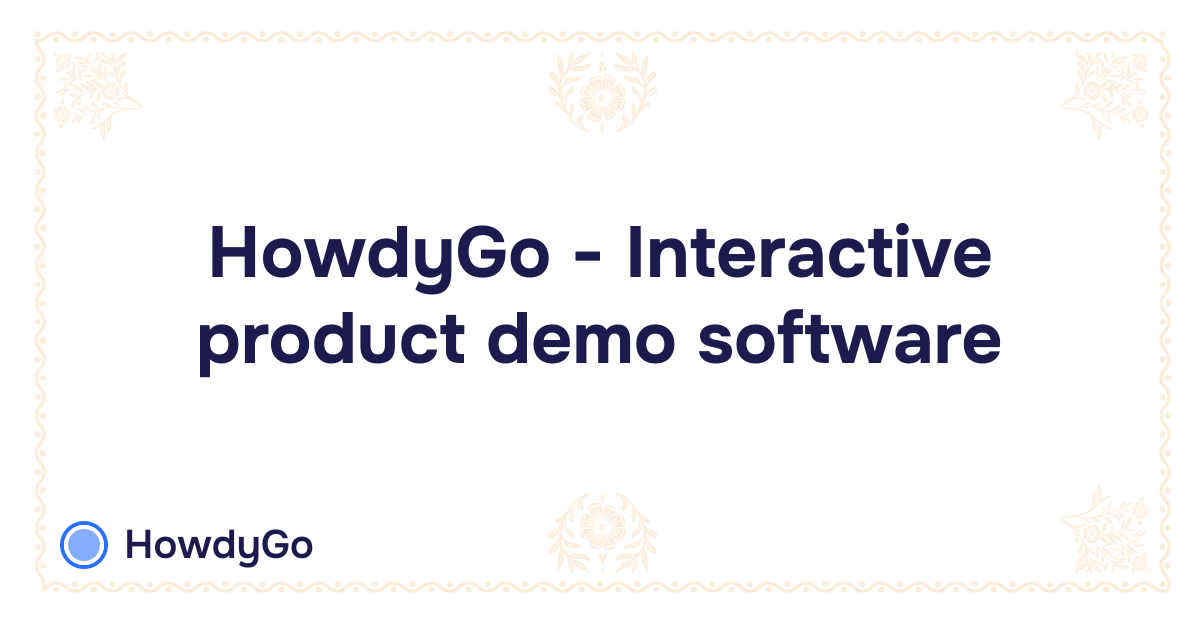
HowdyGo is a focused HTML-capture tool with one standout pricing decision: every plan includes unlimited users and unlimited demos. Demos are true HTML clones that look and behave like your app, sandbox environments are available as an add-on, and the founders are famously hands-on with support.
Key features:
- Full HTML and CSS capture for demos that behave like the real app
- Unlimited users and unlimited demos on all plans
- Collections: product education hubs mixing demos and videos
- Lead capture, demo analytics, and HubSpot, Marketo, and Salesforce Marketing Cloud integrations
- JS SDK for embedding and triggering demos programmatically
What makes it different: the pricing model kills the per-seat math that makes competitors expensive for large teams. A 30-person GTM org pays the same as a 3-person one. The flip side: there is no free tier, the $159/mo entry is steep for solo founders, and the G2 base is small (about 29 reviews, albeit at 5.0).
Pricing and reviews: Starter $159/mo; Pro $399/mo; Enterprise custom; annual billing saves 20%. G2: 5.0 with ~29 reviews.
7. Layerpath
Best for: small teams that want demos, documentation, and training from one recording.
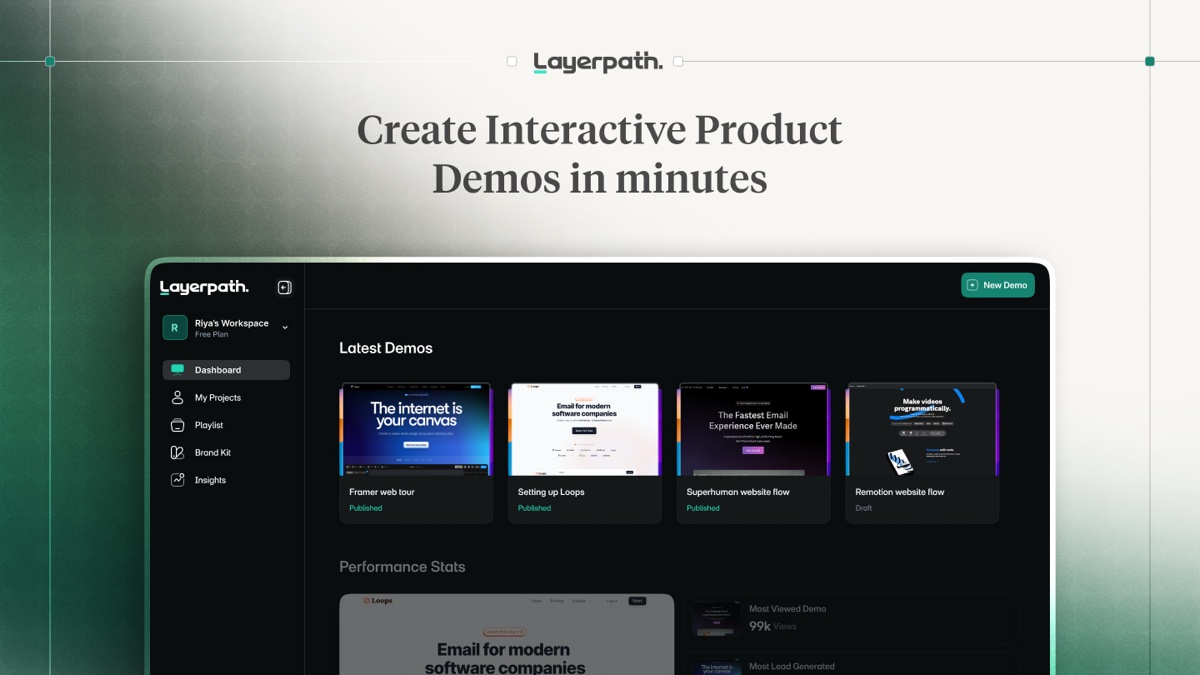
Layerpath records a workflow once and publishes it as an interactive tour, a video, and a step-by-step guide, organized into a branded portal with playlists and training paths. It also ships Path, an AI demo agent, and an agent-driven creation mode in beta. It is as much a customer-education tool as a sales one.
Key features:
- One capture, three outputs: interactive tour, video, and SOP guide
- Path AI demo agent plus beta agent-driven demo creation
- AI voiceovers, text enhancement, and automatic brand styling
- Branded knowledge portal with playlists and training paths
- Chrome extension capture and HD video export
What makes it different: the portal and training-path angle is unique in this group, and Pro at $129/mo with five editor seats and unlimited demos is the cheapest credible team plan on this list. It captures screens rather than HTML, so demo fidelity is a class below the HTML tools, and some advertised features are newer than the marketing suggests, so test your specific workflow on the trial.
Pricing and reviews: Free plan; Pro $129/mo with 5 editor seats; Enterprise custom. No established G2 presence yet, which is the main trust gap versus alternatives.
8. Floik
Best for: solo marketers and support teams on a budget.
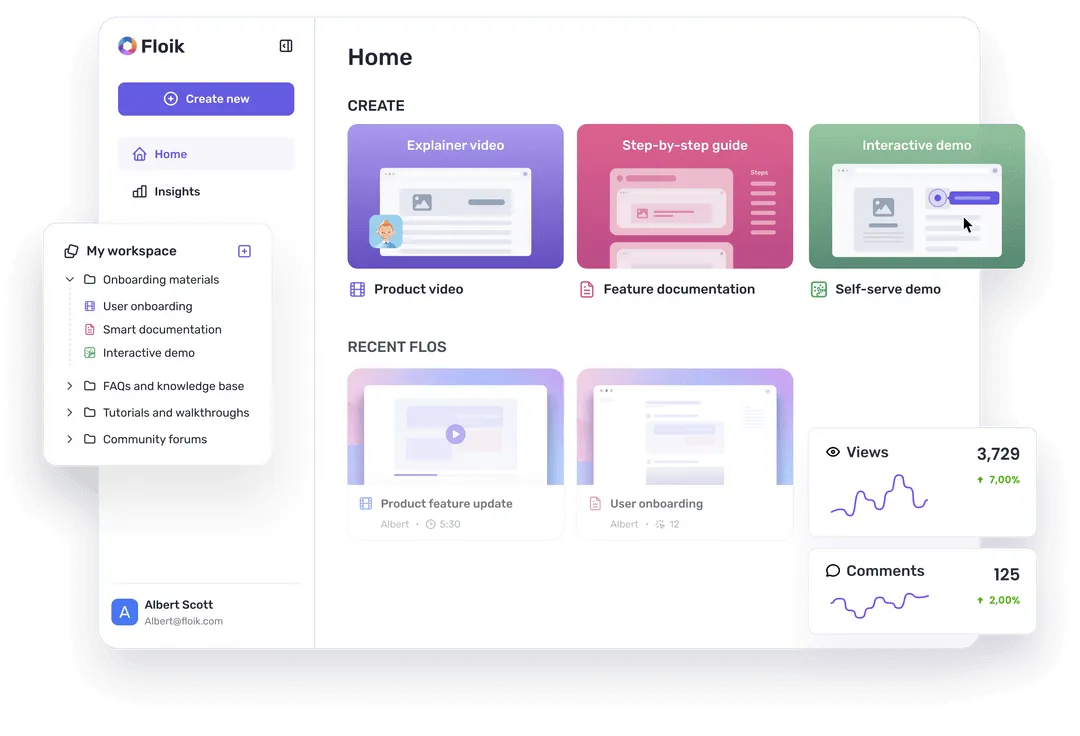
Floik turns one screen recording into three assets: an interactive demo, a narrated explainer video, and a step-by-step guide. Every click becomes an interactive hotspot automatically, AI handles voiceover and guide text, and the price starts at free. Floik was acquired by Kovai.co, the company behind Document360, in late 2024, and continues as a maintained product inside that portfolio.
Key features:
- One recording becomes an interactive demo, a video, and a guide
- Automatic hotspots on every click, with a no-code editor and blur tools
- Multilingual AI voiceover, transcription, and guide generation
- Branching interactive elements and custom branding
- PDF export, embeds, and team spaces on paid tiers
What makes it different: it is the cheapest multi-format pipeline in the category, and AI features are included rather than upsold. It is a content tool with basic analytics, a 10-minute recording cap on Pro, and a roadmap that now depends on its parent company's priorities, so treat it as a utility purchase rather than a platform bet.
Pricing and reviews: Free plan (5 published assets); Guide $19/mo; Pro $49/mo; Pro+ $159/mo; Enterprise custom. G2: 4.7 with ~47 reviews.
9. Hexus
Best for: AI-generated demo content, if you accept the ownership caveat.
Hexus was the most AI-forward of the demo builders: capture once and its AI writes the script, the headlines, the voiceover, and the step instructions, and it can even convert existing videos into demos and docs. The caveat is structural. In early 2026 the founding team joined Harvey, and in March 2026 the product itself was acquired by Olto, which is folding Hexus into its autonomous demo agent platform. The product runs today as "Hexus by Olto".

Key features:
- AI-generated scripts, voiceovers, and step instructions from a single capture
- Video-to-demo conversion for existing recordings and tutorials
- HTML guided demos, demo centers, and name-variable personalization
- AI avatars and automatic screenshot refresh when your UI changes
- HubSpot, Slack, Zapier, and Salesforce integrations
What makes it different: the automation depth of demo creation was ahead of its peers, and the Olto roadmap points toward autonomous demo agents. But you are buying a product whose original team is gone and whose independent roadmap ended, so the sane approach is a short contract and an export plan.
Pricing and reviews: Starter $40/mo annual; Growth $400/mo annual; Enterprise custom. G2: 4.9 with ~14 reviews.
10. Storylane
Best for: GTM teams that want demos across the whole funnel with transparent pricing.
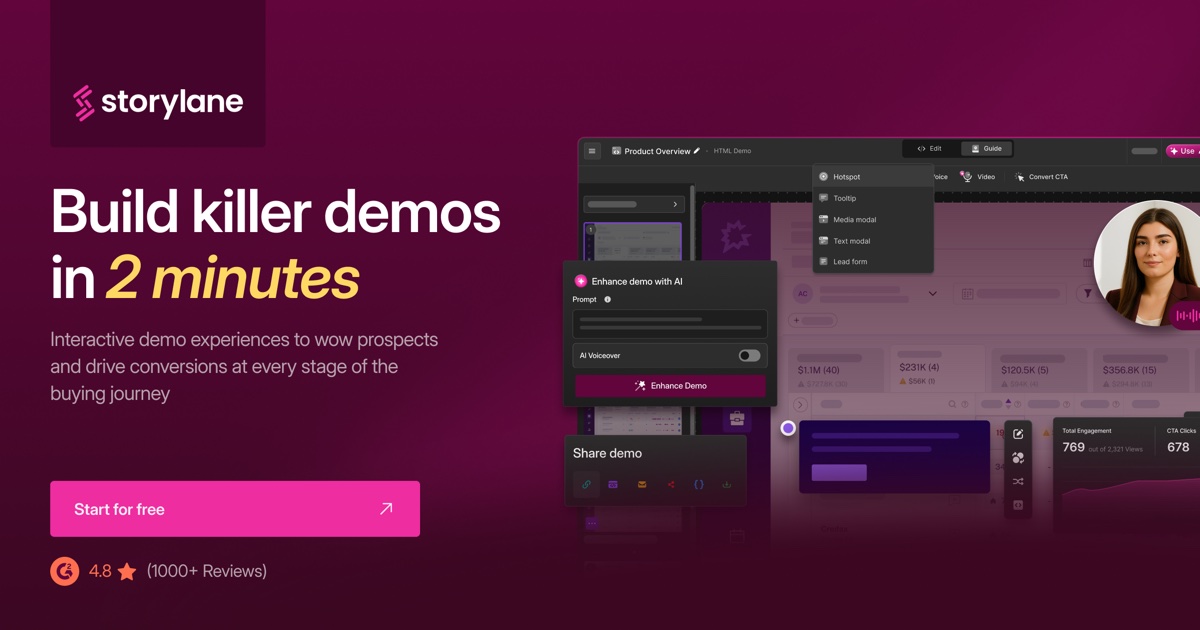
Storylane is the volume leader in interactive demos: the top-rated product in G2's Demo Automation category with the largest review base. It captures demos two ways (fast screenshots or fully editable HTML), layers on AI avatars, voiceovers, and translation, and packages everything from website tours to sandbox environments and multi-demo buyer hubs.
Key features:
- Screenshot and HTML capture via Chrome extension, plus Figma and desktop app inputs
- No-code editor: edit on-screen text and charts, blur data, add guides, chapters, and forms
- AI suite: prompt-based demo editing, AI avatars and voiceovers, translation
- Buyer Hubs for multi-demo deal rooms, plus offline demos
- Lead capture with account reveal and demo A/B testing
- Sandbox demos and presenter mode for live calls on higher tiers
What makes it different: breadth plus transparency. Few competitors cover screenshot demos, HTML demos, sandboxes, and buyer hubs in one product with public prices at every tier. The most-cited complaint on G2 is the customization ceiling on styling and layout, and there is a real price cliff between the $40-50 Starter and the $500+ Growth tier. See our head-to-head in Naoma vs Storylane.
Pricing and reviews: Free plan (1 demo); Starter $40/mo annual; Growth $500/mo annual with HTML editing and AI avatars; Premium $1,200/mo annual; Enterprise custom. G2: 4.8 with ~1,400+ reviews.
Gesinn dat an Aktioun, schwätzt mat Naoma
AI Demo Agent deen 6–20% vun de Visiteuren konvertéiert. Probéiert et elo.
Enterprise demo platforms
This category is for presales and solutions-engineering teams: full product clones, live demo data injection, video demo libraries, governance, and buyer analytics. Contracts here are annual, and pricing is mostly sales-led. If the number you're defending is cost per demo at scale, it's worth seeing how enterprise teams evaluate an AI demo agent before signing one of these.
11. Walnut
Best for: seller-led enterprise teams that demo live and want deal rooms attached.
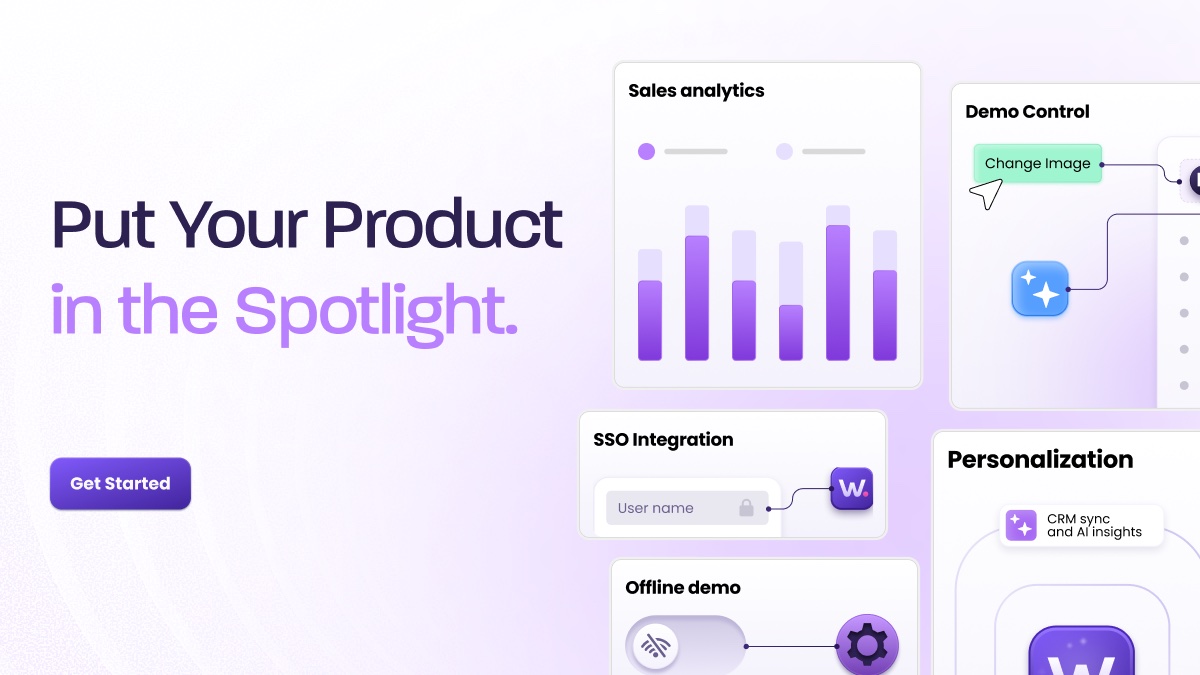
Walnut is built around the live sales demo: presenter seats, personalized demo environments, sandboxes, and, since mid-2025, Interactive Deal Rooms that combine demos, documents, and mutual action plans in one buyer workspace. Its AI Mode edits and personalizes demos from a single prompt, and StoryCapture lets an SE narrate a flow by voice while AI assembles the demo.
Key features:
- HTML and screen capture with full interactivity, plus sandbox demos
- AI Mode for prompt-based demo editing and personalization
- Interactive Deal Rooms combining demos, docs, and mutual plans
- InsightsAI engagement analytics with optimization suggestions
- Salesforce and HubSpot integrations with engagement data in the pipeline
What makes it different: it is the most complete seller-led package: live demo tooling plus deal rooms is a combination none of the tour tools match. The tradeoffs are the classic enterprise ones: no free tier, entry around $7k/yr billed annually, and a learning curve that G2 reviewers measure in weeks. If that shape does not fit, we collected options in Walnut alternatives.
Pricing and reviews: Ignite $575/mo and Accelerate $1,550/mo, both billed annually; Scale custom with deal rooms and a 243-language translation engine. G2: 4.5 with ~100+ reviews.
12. Reprise
Best for: enterprises standardizing every demo modality on one platform.
Reprise is the only vendor spanning all three enterprise demo modalities: Replay (captured product tours), Reveal (live data overlay on your real app), and Replicate (full standalone clones). In 2025-2026 it added an agentic AI capture system and an MCP integration that lets AI agents assemble demos from customer context.
Key features:
- Three demo products in one platform: tours, live overlays, and full clones
- Agentic AI capture for automated demo creation
- Reprise MCP for AI-agent demo assembly using customer context
- Role-based access and global CDN delivery for demo distribution
- Demo analytics and engagement tracking across all formats
What makes it different: consolidation. A large SE org can standardize on one vendor instead of stitching a tour tool, an overlay tool, and a cloning tool together. The counterweight is the lowest G2 rating in this comparison (4.4), with reviewers citing complexity and a steep learning curve for advanced configurations. If you want the platform breadth without the platform contract, see our Reprise alternative breakdown.
Pricing and reviews: custom only: a single annual platform fee plus per-user licenses. Third-party pricing data reports roughly $20k-100k+/yr with a median around $32k. G2: 4.4 with ~174 reviews.
13. Demostack
Best for: SE teams that need a perfect, stable copy of the product to demo from.
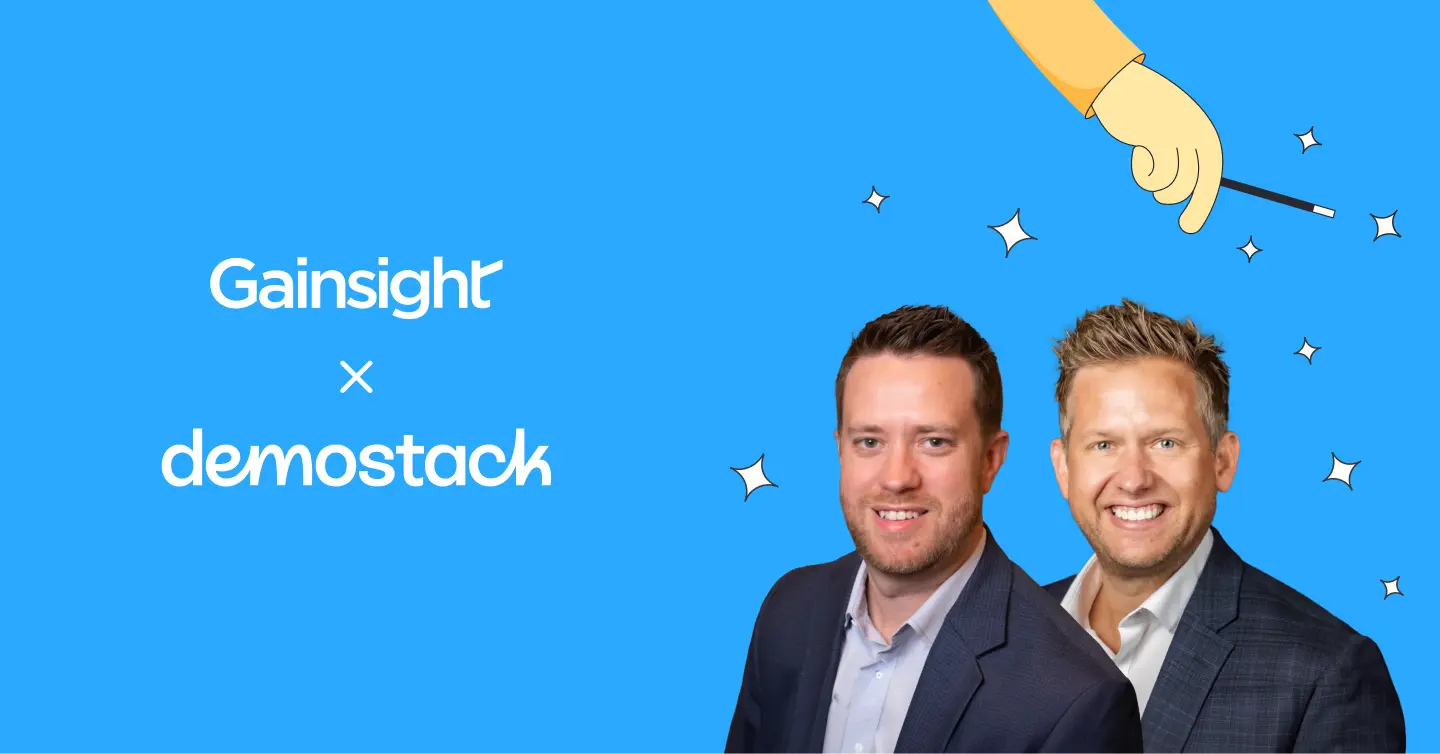
Demostack's core bet is high-fidelity cloning: it replicates your web app's entire front end with no code and no backend access, producing a standalone replica your team can reshape per deal. In May 2026 it launched Demostack Agents: a Builder Agent that edits simulations from natural language and a Demo Partner agent that assists during demos.
Key features:
- No-code cloning of your full web app front end
- AI Simulation Builder: edit the clone via natural language
- Demo Partner agent assisting live demos
- Bulk AI editing of entire datasets, plus AI text and image generation
- Demo HQ for versioning, sharing, and governance, with revenue-tied analytics
What makes it different: clone fidelity plus the most aggressive agentic-AI push among the independents. The known cost of the cloning approach: replicas need maintenance as your real product evolves, and pricing is opaque with a small public review base.
Pricing and reviews: custom pricing, contact sales, no free tier. G2: 4.7 with ~78 reviews.
14. Saleo
Best for: teams that demo the real product but are embarrassed by the data in it.
Saleo takes the opposite approach to cloning: it injects flawless, realistic demo data directly into your actual live product in the browser, so nothing about the app is fake. Its Demo Agent runs autonomous demos on top of those environments, and a Data Creation Agent generates context-aware datasets. In June 2026, Consensus acquired Saleo; the product continues, now as the live-demo pillar of the combined platform.

Key features:
- Live data injection: perfect graphs, tables, and text in your real product
- Capture product tours for self-serve buyer exploration
- AI Demo Agent for autonomous 24/7 demos
- Data Creation Agent for realistic, context-aware demo datasets
- DemoSync to propagate demo updates across team environments
What makes it different: it is consistently the highest-rated product in the category on G2 (4.9), and the live-data approach solves a problem clones and screenshots cannot: demoing the actual app without empty accounts and dummy data. Post-acquisition, roadmap and packaging will converge with Consensus, which cuts both ways depending on whether you want that ecosystem.
Pricing and reviews: custom pricing across its product lines, no numbers published. G2: 4.9 with ~210 reviews.
15. Consensus
Best for: enterprises scaling personalized video demos across sales, presales, and channel.
Consensus comes from the video side of demo automation: instead of scheduling a call, you send an interactive video demo that personalizes itself to each viewer's role and interests. Its Demolytics engine then shows you every stakeholder who watched, how far, and what they cared about. In 2026 Consensus acquired both Saleo and Peel, assembling video demos, tours, live demos, and AI demo agents under one roof.

Key features:
- Interactive video demos that branch on viewer role and interests
- Demolytics: stakeholder discovery, heatmaps, and multi-threading analytics
- Interactive product tours and AI-personalized sandbox simulations
- AI video with 65+ languages and AI avatars
- Salesforce, HubSpot, Marketo, Gong, and Highspot integrations, plus a channel partner portal
What makes it different: buyer intelligence. Demolytics remains the strongest stakeholder-analytics layer in the category, and after the acquisitions Consensus is the biggest platform play in demo automation. The heritage is still video-first: the live-demo and agent capabilities arrived by acquisition and are still being integrated. If the platform is more than you need, we listed lighter options in Consensus alternatives.
Pricing and reviews: Starter $600/mo (5 users) and Pro $1,250/mo (10 users), billed annually; Enterprise custom. G2: 4.7 with ~1,187 reviews.
16. Demoboost
Best for: presales teams that want enterprise-platform breadth at mid-market prices.
Demoboost packs six demo formats into one platform: HTML tours, screenshot demos, video demos, sandboxes, live demo overlays, and mobile demos, and connects demo engagement to pipeline through its revenue-intelligence layer. It is the value play in the enterprise category, at roughly half the entry price of the US platforms.

Key features:
- Six demo formats, including mobile demos and live overlays
- HTML capture via Chrome extension with AI-powered personalization
- Demo playlists structured around the buyer journey
- Feature-level engagement analytics and buyer intent signals
- Salesforce and HubSpot integrations plus webhooks, with whitelabeling on enterprise plans
What makes it different: format breadth per dollar in a category where everyone else hides pricing. Reviews are near-perfect (4.9 on G2, nothing below four stars), though from a base of about a hundred reviews, and it is the smallest vendor in the enterprise group, with the thinner ecosystem that implies. More options in Demoboost alternatives.
Pricing and reviews: Start Up $375/mo (2 seats); Essentials $600/mo (5 seats); Growth $1,200/mo (10 seats, sandboxes, revenue intelligence); Enterprise custom. Billed yearly. G2: 4.9 with ~103 reviews.
AI SDRs and conversational sales agents
These three show up on demo automation shortlists constantly, and all are strong products. Qualified and Rep.ai automate the conversation rather than the demo: they engage visitors, qualify, and book meetings, but do not drive your product on screen. 1mind does run demos, but its center of gravity is the live enterprise call rather than the website. Shortlist them for conversation coverage and call support, not for self-serve demo delivery.
17. Qualified
Best for: mid-market and enterprise inbound teams that run on Salesforce.
Qualified is the most mature AI SDR platform on this list. Its agent, Piper, engages website visitors through chat, voice, and video, follows up on inbound leads by email, serves personalized offers, and books meetings without forms. Salesforce agreed to acquire Qualified in December 2025 and closed the deal in April 2026, so the product is now "Qualified from Salesforce" and is being folded into the Agentforce ecosystem.

Key features:
- Piper Conversations: real-time engagement with website visitors via text, voice, and video
- Piper Email: autonomous personalized follow-up that carries website context into the inbox
- Instant meeting scheduling without forms, plus Slack handoff to human reps
- PiperX release with pinned concierge mode docked on the site
- Deep Salesforce-native CRM orchestration, multi-brand and multi-language support
What makes it different: multichannel maturity and review volume. Piper covers the website, the inbox, and Slack with one agent, and roughly 1,200+ G2 reviews at 4.9 make it the most validated product in the agent category. The important nuance: it automates conversion conversations, not product demos. Piper does not drive your product on screen the way a demo agent does, and after the acquisition, non-Salesforce stacks are second-class citizens. We compared the two approaches in Naoma vs Qualified.
Pricing and reviews: custom pricing across three tiers, no numbers published. Third-party procurement data puts the list price around $68k/yr for the entry tier, with negotiated deals typically at $40-50k/yr. G2: 4.9 with ~1,200+ reviews.
18. Rep.ai
Best for: teams that want human reps and an AI twin sharing one live video chat channel.
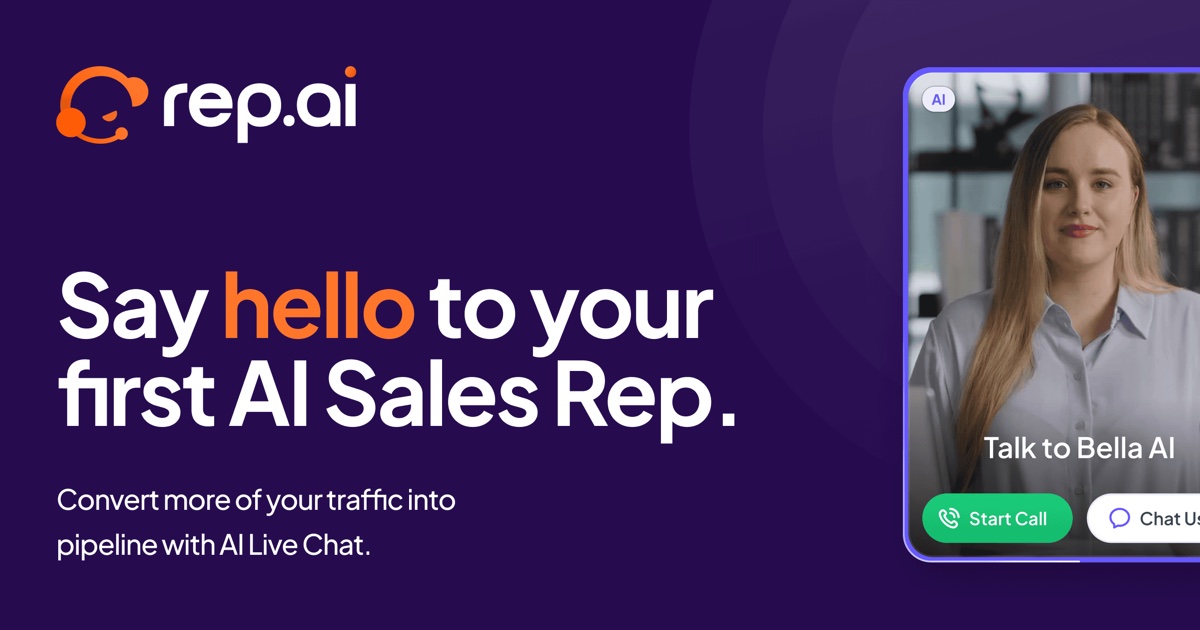
Rep.ai puts live video chat on your website, staffed by your actual reps when they are available and by an AI "digital twin" when they are not. The AI rep converses in text, voice, and video, qualifies visitors, books meetings, and can guide people around the site. Humans can jump into any session and take over.
Key features:
- AI live chat with voice and video, available 24/7
- Custom AI avatars modeled on your own reps
- Human takeover: reps join sessions with video and co-browsing at any point
- Visitor de-anonymization and buying-signal detection with alerts
- AI-guided site navigation and native calendar booking
What makes it different: it is the only tool here built around the handoff between human and AI in the same conversation. The framing is rep-first rather than demo-first: the agent represents your team, it does not run a structured product demo. If the product walkthrough itself is what you need automated, the demo-centric agents go deeper.
Pricing and reviews: custom pricing across two plans, no numbers published and no free tier. G2: 4.8 with a small base of ~14 reviews, so social proof is thin compared to the rest of this category.
19. 1mind
Best for: enterprises that want an AI sales engineer sitting in on live calls.
1mind builds photorealistic AI "Superhumans" with a face, a voice, and a name. They qualify inbound buyers on the website, run tailored demos, handle objections, and, uniquely, join live Zoom calls as a visible participant through the Ride-Along release, answering deep technical questions while your AE runs the room. In March 2026, Clari and Salesloft named 1mind the AI successor to Drift as that product winds down.
Key features:
- Photorealistic video-and-voice agents on the website, in-product, and on live calls
- Ride-Along Superhuman joins scheduled video calls as an AI sales engineer
- Objection handling and technical Q&A trained on your product and competitive content
- In-product mode for intercepting product-led users before they churn to a form
- 24/7 autonomous qualification and meeting booking
What makes it different: scope and ambition. Nothing else on this list will present slides and field technical questions on a live enterprise call. The tradeoff is access: entry pricing is roughly $100k per year per public reporting, contracts are annual, implementation takes one to two months, and most changes route through 1mind's team rather than a self-serve portal. We covered the more affordable routes in 1mind alternatives.
Pricing and reviews: custom only, no published pricing and no self-serve tier; public reporting puts entry near $100k/yr. G2: 4.9 from a very small base of ~7 reviews.
The storytelling wildcard
20. ScreenSpace
Best for: companies with complex products that need an emotional, cinematic pitch.
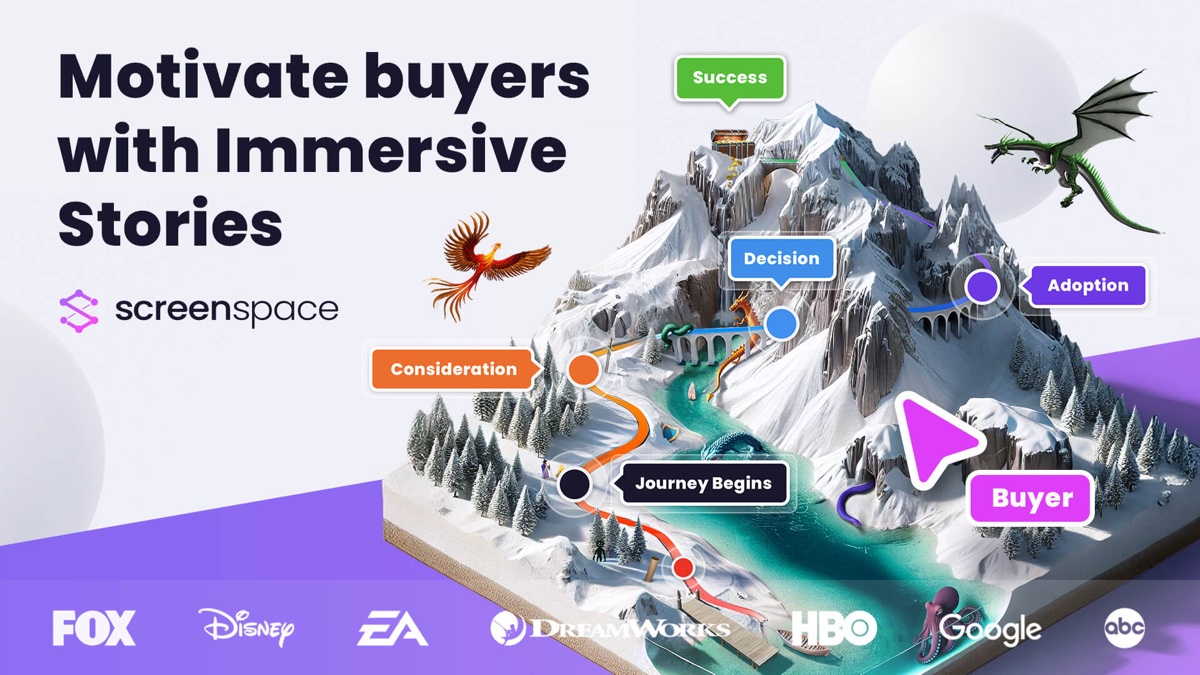
ScreenSpace is not a demo tool in the usual sense. Founded by ex-Hollywood storytellers, it builds immersive, choose-your-own-adventure product stories: scroll-driven cinematic experiences that can embed screen captures, video, animation, and even live demo environments. In 2026 it works as a productized service: you buy a narrative strategy engagement and a finished Visual Story, with the platform included.
Key features:
- Cinematic, interactive product stories with multi-persona journeys
- Embeds for screen captures, video, animation, and live environments
- Built-in lead capture and per-viewer engagement analytics
- Narrative strategy workshop, brand voice guide, and buyer journey map included
- Fractional creative direction through an ongoing partnership tier
What makes it different: it competes on emotion and production value, not automation. There is no AI agent and no auto-generation; you buy an outcome rather than a tool. For a launch centerpiece or a category-creation story, nothing else here comes close. For scaled demo output, it is the wrong shelf entirely.
Pricing and reviews: Narrative Foundation $8,000 one-time; Visual Story $28,000 one-time including 12 months of platform access; Creative Partnership from $7,500/mo. G2: 4.9 with ~26 reviews.
Which demo automation platform should you choose?
A quick rule of thumb by go-to-market motion before the detailed criteria: PLG teams get the most from interactive tours (self-serve buyers want to click, not talk), sales-led teams from sandboxes and video libraries that support reps through committee deals, and hybrid motions from conversational AI agents that can demo, qualify, and route in one step — self-serve for the researchers, a booked meeting for the enterprise buyers.
- Choose Naoma if your inbound outruns your team's capacity to qualify and demo it: an AI account executive with memory and prospect enrichment that runs the first conversation for every lead and signup — live video demos of your real product, qualification in minutes in 80+ languages, around the clock — so your AEs only see the buyers worth their time, from $299/mo with pay-per-engaged-demo pricing you can verify against public case numbers
- Choose Navattic, Supademo, or Storylane if you need self-serve interactive tours: Navattic for HTML fidelity, Supademo for budget, Storylane for funnel breadth
- Choose HowdyGo or Layerpath if team-wide seats or training content matter more than brand-name tooling
- Choose Walnut, Reprise, Demostack, or Saleo if presales is your profession: deal rooms (Walnut), all three modalities (Reprise), perfect clones (Demostack), or live data (Saleo)
- Choose Consensus if you need personalized video demos and stakeholder analytics at enterprise scale
- Choose Demoboost if you want the enterprise feature set at mid-market prices
- Choose Qualified if you run on Salesforce, have serious inbound volume, and want the most battle-tested AI SDR for conversations rather than product demos
- Choose 1mind if you are enterprise-sized and need an AI sales engineer on live calls, with the budget to match
- Choose ScreenSpace if you need one unforgettable product story rather than a hundred demos
Two closing habits from teams that choose well. First, separate "content" tools from "conversation" tools: a tour library and an AI demo agent solve different failures, and many teams need one of each. Second, benchmark before you buy: our demo conversion benchmarks give you the reference points, and the ROI calculator turns any promised lift into pipeline math you can defend.
FAQ
What is a demo automation platform? Software that removes humans from some part of the product demo: creating it (interactive demo builders), staging it (demo environment and data platforms), or giving it (AI demo agents). The categories overlap less than vendor marketing suggests, which is why this list groups them explicitly.
What is the difference between an interactive demo and an AI demo agent? An interactive demo is content: your team records a tour and buyers click through it alone. An AI demo agent is a conversation: it presents the product live, answers questions, qualifies the buyer, and books the next step. Tours are cheap and scale infinitely; agents convert dramatically better at the moment of buying intent. Many teams run both.
Which demo automation platforms publish pricing? Nine of the twenty: Naoma (from $299/mo), Storylane, Supademo, Arcade, Guideflow, HowdyGo, Layerpath, Floik, and Hexus among the builders, plus Walnut ($575/mo), Consensus ($600/mo), Demoboost ($375/mo), and ScreenSpace ($8k+) at the heavier end. Qualified, Rep.ai, 1mind, Reprise, Demostack, Saleo, and Navattic's paid tiers are all sales-led.
Which platform is best for a small team? For self-serve demo content: Supademo, Floik, or Layerpath, each with a free tier and paid plans under $130/mo. For an AI demo agent without an enterprise contract: Naoma's Starter plan at $299/mo ($249 on annual billing) is the only published agent pricing in the category, and you pay per engaged demo rather than per seat.
How did the 2026 acquisitions change the market? Salesforce closed its Qualified acquisition in April 2026, Consensus acquired Saleo in June 2026, and the Hexus product moved to Olto in March 2026. None of these products disappeared, but each roadmap now serves a larger platform strategy. If you are buying one of them, ask directly how the integration affects the tier you are purchasing.
How should I evaluate a demo automation tool before buying? Put it in front of real traffic or real deals for two weeks and measure one number against your baseline: visitor-to-demo conversion for agents, demo-to-meeting rate for tours, demo-prep hours for enterprise platforms. Every tool on this list offers a trial, a free tier, or a pilot; a vendor that will not let you test against a baseline is telling you something.
You have just read 6,000 words about demo automation. Or you can experience it in sixty seconds: get an AI demo now →

Stop iwwer Demoen ze liesen.
Erlieft eng.
Naoma mécht personaliséiert Produkt Demoen 24/7 an 80+ Sproochen. Gesinn selwer an ënner 2 Minutten.